Seven years ago, I had a problem I couldn’t stop thinking about.
Tree planting events were happening everywhere — communities showing up, saplings going into the ground, photos being taken, everyone feeling good. And then? Nothing. Nobody was going back to check. Nobody was tracking whether those trees actually made it. Survival rates were quietly terrible, and most people didn’t even know it.
So I built an app. Nothing fancy at the start — just a way to track tree growth and survival over time. Simple input, simple data. But it was enough to make a difference in how we thought about post-planting accountability.
What I didn’t know back then was that this small project would eventually lead me somewhere I never expected.
Fast Forward to Today — This Is Not the Same App
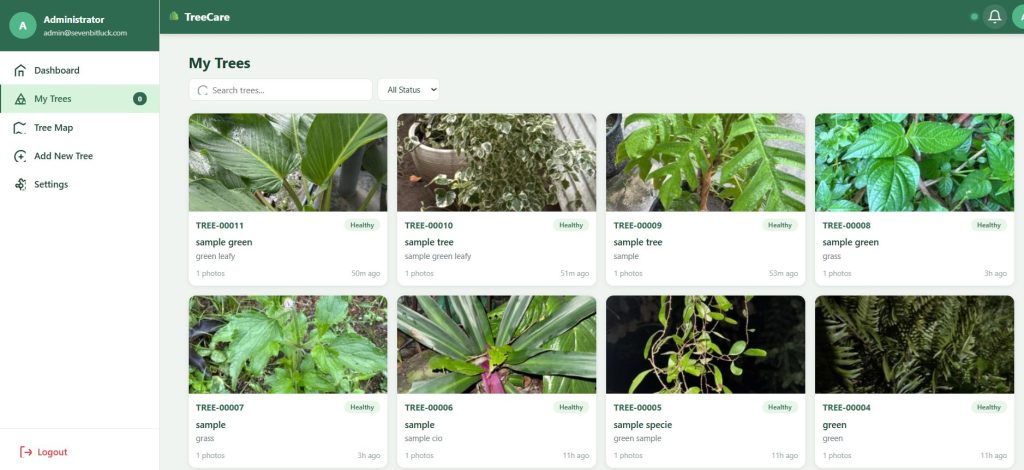
After seven years of iteration, feedback from field workers, and watching reforestation technology evolve, I made the decision to integrate artificial intelligence into the platform — and it completely transformed what the app could do.
We’re not just tracking if a tree survives anymore. We’re now analyzing how it’s doing, why it might be struggling, and what to do about it — before it’s too late.
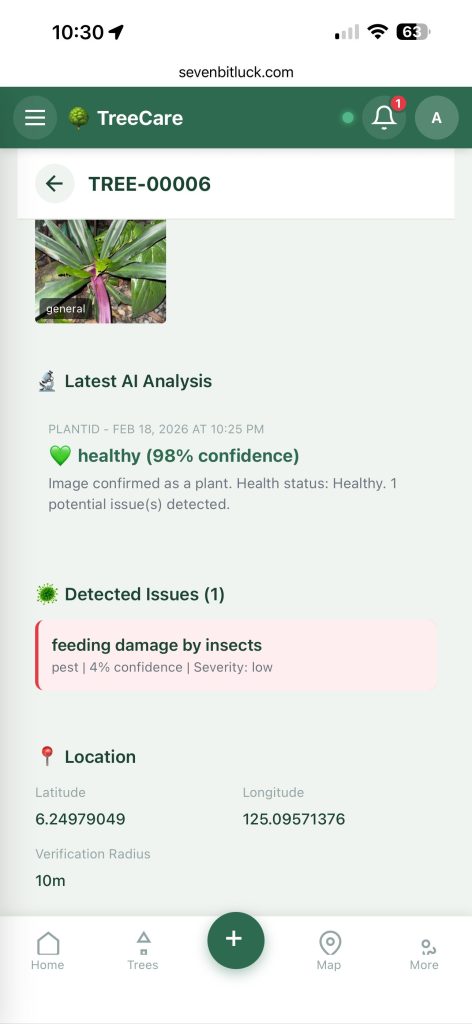
The app now evaluates full tree health status, flags potential issues like disease, nutrient deficiency, or environmental stress, and gives field teams GPS-precise mapping for every single tree in the system. Every. Single. One.
This is the kind of monitoring that large-scale reforestation projects desperately need but rarely have access to — and now it’s available to anyone from community garden volunteers to government forestry agencies.
Three AI Agents Working Together (Here’s Why That Matters)
Most apps use one AI model. I went with three.
The system runs three leading AI model agents simultaneously, cross-referencing their analysis to deliver more accurate and actionable insights. Think of it like getting a second and third opinion from specialists — automatically, in seconds, every time a photo is submitted.
Whether a tree is showing early signs of leaf blight, root stress, or just isn’t getting enough nutrients, the system catches it early and recommends targeted interventions. That early-detection window is everything in reforestation. Miss it, and you lose the tree. Catch it, and you can turn things around.
One Thing That Genuinely Surprised Me: It Works at Night
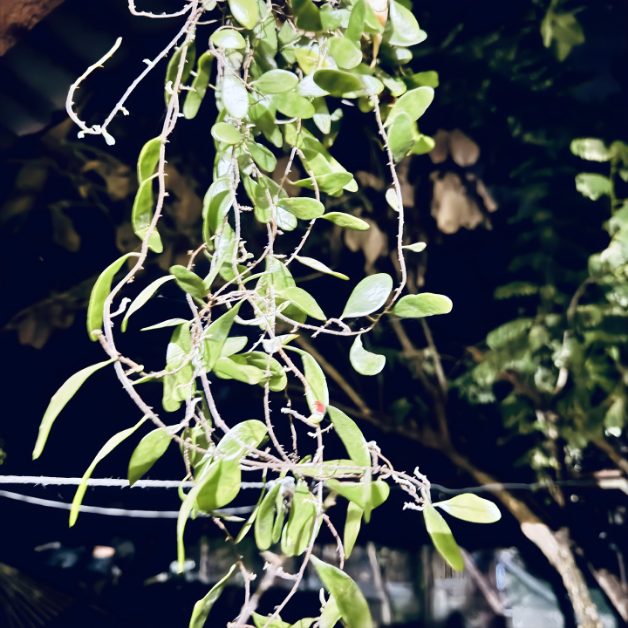
I’ll be real — I wasn’t expecting this.
When I started testing the AI analysis with nighttime photos, I figured accuracy would drop significantly. Low light, shadows, color distortion — all the things that mess with image-based analysis.
But the results? Surprisingly high accuracy. The health assessments from nighttime captures were holding up in a way I didn’t anticipate.
This is a big deal for field teams doing evening patrols or early morning rounds in remote areas. They don’t have to wait for daylight to collect reliable data anymore. Monitoring is now genuinely 24/7.
Built for the Real World — Not a Lab
One thing I’ve always been firm about: this tool has to work where trees actually grow — which is rarely somewhere with great Wi-Fi.
That’s why I built it as a Progressive Web App (PWA). No app store. No installation headaches. It runs on any device — smartphone, tablet, laptop — straight from the browser.
And the feature I’m most proud of? Offline mode. Field workers in remote planting sites can keep collecting data even with zero signal. The app stores everything locally and automatically syncs once they’re back online.
No data lost. No gaps in monitoring. No excuses for skipping a check-in.
Who Is This Actually For?
Honestly? More people than you’d think.
Whether you’re managing a small community reforestation plot, running a corporate ESG tree planting program, coordinating a government watershed rehabilitation project, or just deeply invested in your backyard food forest — this app was built with you in mind.
The goal has always been simple: every tree planted deserves a chance to survive. And now, for the first time, we have the tools to make that happen at scale.
7 Years. One Mission. Still Going.
I think about those early builds a lot — the clunky interface, the manual data entry, the nights I spent wondering if this was even worth pursuing.
It was.
If there’s one thing this journey has taught me, it’s that technology only matters if it gets used where it counts. An AI model sitting in a server room doesn’t plant trees. But a tool that a volunteer can pull up on their phone during a Saturday morning replanting drive? That changes outcomes.
We’re still early. There’s still so much to build. But the foundation is solid, the AI is working, and the trees — a lot more of them — are making it.
Have questions about the app or want to explore how it could work for your reforestation project? Drop a comment below or reach out directly — I’d love to hear from you.
#AI tree monitoring app # reforestation technology 2024 #tree health analysis AI #progressive web app forestry #tree survival rate tracking #AI-powered conservation #tree planting app Philippines #forest monitoring technology #smart reforestation tools #tree GPS mapping app #offline tree monitoring #AI plant health detection #community reforestation app #tree conservation technology #environmental tech app