*Learn my proven approach to custom software development, from initial planning to final deployment. Discover how I create reliable systems like Point-of-Sale (POS) and Document Tracking applications that solve real business problems.*
# Introduction: Why Custom Software Development Matters
In today’s fast-paced digital world, businesses need software solutions that fit their unique requirements. Off-the-shelf applications often fall short because they cannot adapt to specific workflows or scale with growing demands. This is where **custom software development** becomes essential.
I have spent years perfecting my craft as a software developer, building systems that range from **Point-of-Sale (POS) systems** to **document tracking applications**. Through this journey, I have developed a systematic approach that ensures every project I undertake is completed correctly and efficiently.
In this article, I will walk you through my complete software development process. Whether you need a custom business application, an inventory management system, or any specialized software solution, understanding my methodology will show you why I am the right developer for your project.
# My Software Development Philosophy
Before I write a single line of code, I always remind myself of one fundamental principle: **software exists to solve problems**. Every feature, every function, and every design decision must serve a purpose. This philosophy guides everything I do.
I believe that successful software development requires three core elements:
– **Deep understanding of the client’s needs** – I take time to understand not just what you want, but why you need it
– **Strategic planning and architecture** – I design systems that are scalable, maintainable, and future-proof
– **Clean, efficient code** – I write code that is readable, well-documented, and optimized for performance
This approach has allowed me to deliver software systems that businesses rely on daily, from small retail stores using my POS solutions to organizations managing thousands of documents with my tracking systems.
# Phase 1: Requirements Gathering and Analysis
The first phase of my software development process is **requirements gathering**. This is arguably the most critical step because a clear understanding of the problem determines the success of the entire project.
### How I Conduct Requirements Analysis
When a client approaches me with a project, I start by asking detailed questions:
– What problem are you trying to solve?
– Who will use this software?
– What are the essential features you need?
– What systems does this need to integrate with?
– What is your expected timeline and budget?
I document everything meticulously. I create **user stories** that describe how different users will interact with the system. For example, when I developed my **Point-of-Sale system**, I identified multiple user types: cashiers who process transactions, managers who generate reports, and administrators who configure the system.
### Creating a Software Requirements Specification
After gathering all the information, I create a **Software Requirements Specification (SRS)** document. This document outlines:
– Functional requirements (what the software must do)
– Non-functional requirements (performance, security, scalability)
– User interface requirements
– Data requirements
– Integration requirements
This document becomes our roadmap. Both the client and I refer to it throughout the project to ensure we stay aligned with the original goals.
# Phase 2: System Design and Architecture
Once I understand what needs to be built, I move to the **system design phase**. This is where I decide how the software will be structured and how different components will interact.
### Choosing the Right Technology Stack
Selecting the appropriate **technology stack** is crucial for project success. I consider several factors:
– **Scalability** – Can this technology handle growth?
– **Performance** – Will it deliver the speed users expect?
– **Maintainability** – Is the codebase easy to update and extend?
– **Security** – Does it support the security measures needed?
– **Cost** – Is it cost-effective for the client’s budget?
For my **Document Tracking System**, I chose a web-based architecture using modern frameworks that allow users to access the system from any device. This decision was driven by the client’s need for remote access and real-time document monitoring.
### Database Design
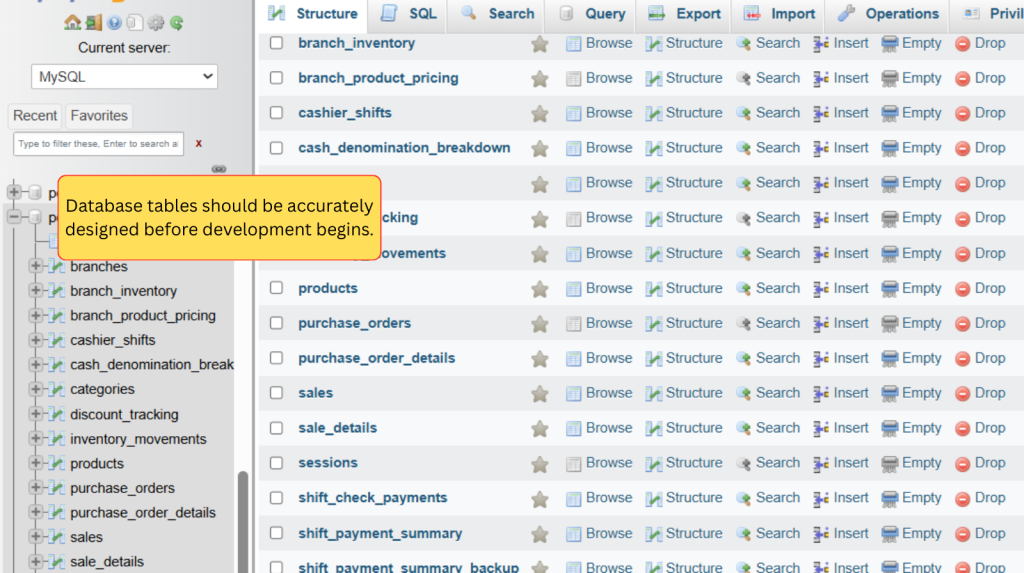
A well-designed database is the backbone of any software system. I follow **database normalization** principles to eliminate redundancy and ensure data integrity. I create **Entity-Relationship Diagrams (ERD)** to visualize how different data entities connect.
For my POS system, the database design includes tables for:
– Products and inventory
– Customers and loyalty programs
– Transactions and payment methods
– User accounts and permissions
– Sales reports and analytics
### Application Architecture
I design applications using proven architectural patterns. Depending on the project requirements, I might use:
– **Model-View-Controller (MVC)** for clear separation of concerns
– **Microservices architecture** for large, complex systems
– **Layered architecture** for traditional business applications
The goal is always to create a structure that is easy to understand, modify, and scale.
## Phase 3: Development and Implementation
With a solid plan in place, I begin the **software development phase**. This is where I transform designs into working code.
### My Coding Standards
I follow strict coding standards to ensure quality:
– **Clean code principles** – I write code that is self-explanatory and well-organized
– **Consistent naming conventions** – Variables, functions, and classes follow predictable patterns
– **Modular design** – I break functionality into reusable modules
– **Version control** – I use Git to track every change and enable collaboration
### Iterative Development Approach
I do not build the entire system at once. Instead, I use an **iterative development approach** where I build and test features incrementally. This allows me to:
– Deliver working features faster
– Get early feedback from clients
– Identify and fix issues before they compound
– Adapt to changing requirements
For my Document Tracking System, I started with core document upload and retrieval features. Once those were stable, I added search functionality, user permissions, audit trails, and notification systems. Each iteration added value while maintaining system stability.
## Phase 4: Testing and Quality Assurance
No software leaves my hands without thorough testing. I believe that **quality assurance** is not an optional phase—it is an integral part of development.
### Types of Testing I Perform
– **Unit testing** – I test individual functions and modules in isolation
– **Integration testing** – I verify that different modules work together correctly
– **System testing** – I test the complete system against requirements
– **User acceptance testing (UAT)** – I involve end users to validate the system meets their needs
– **Performance testing** – I ensure the system performs well under expected load
– **Security testing** – I check for vulnerabilities and implement protections
When I built my Point-of-Sale system, testing was extensive. I simulated hundreds of concurrent transactions, tested edge cases like refunds and partial payments, and verified that reports generated accurate data. This rigorous testing ensures reliability in real-world conditions.
## Phase 5: Deployment and Training
After testing confirms the software is ready, I move to **deployment**. This phase requires careful planning to minimize disruption to business operations.
### Deployment Strategy
I typically use one of these deployment approaches:
– **Phased rollout** – Deploy to a small group first, then expand
– **Parallel running** – Run new and old systems simultaneously during transition
– **Big bang deployment** – Switch completely to the new system (for smaller implementations)
### User Training and Documentation
Software is only as good as the people using it. I provide comprehensive **user training** and create detailed documentation including:
– User manuals with step-by-step instructions
– Video tutorials for visual learners
– Quick reference guides for daily tasks
– Administrator guides for system configuration
## Showcasing My Work: Real-World Systems I Have Built
### Point-of-Sale (POS) System
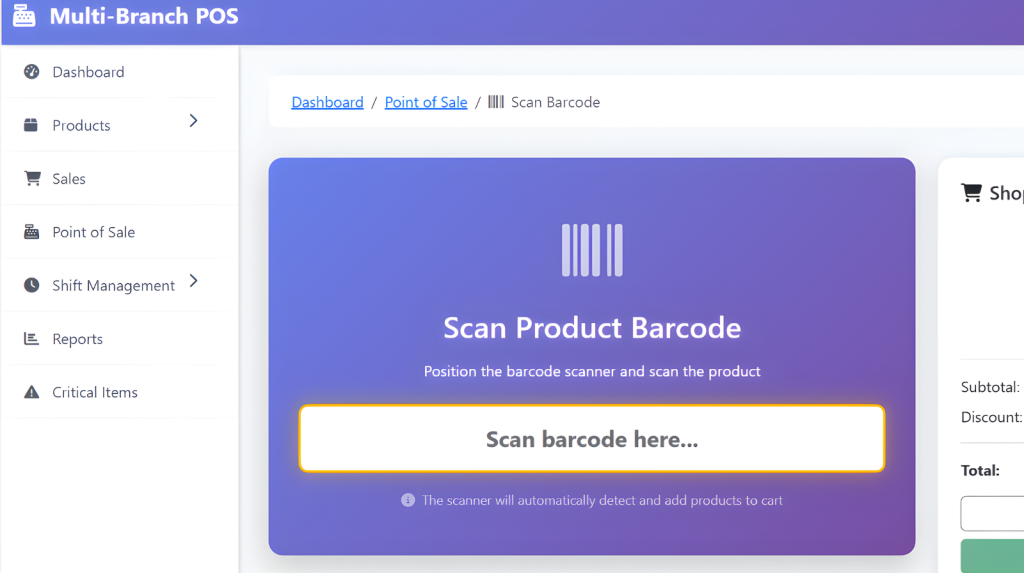
My **custom POS system** is designed for retail businesses that need more than basic transaction processing. Key features include:
– **Fast transaction processing** with barcode scanning support
– **Inventory management** with automatic stock level alerts
– **Customer management** with loyalty program integration
– **Multi-payment support** including cash, card, and digital wallets
– **Comprehensive reporting** with sales analytics and trends
– **Multi-branch support** for businesses with multiple locations
This system has helped retail stores streamline their operations, reduce checkout times, and gain valuable insights into their sales patterns.
### Document Tracking System
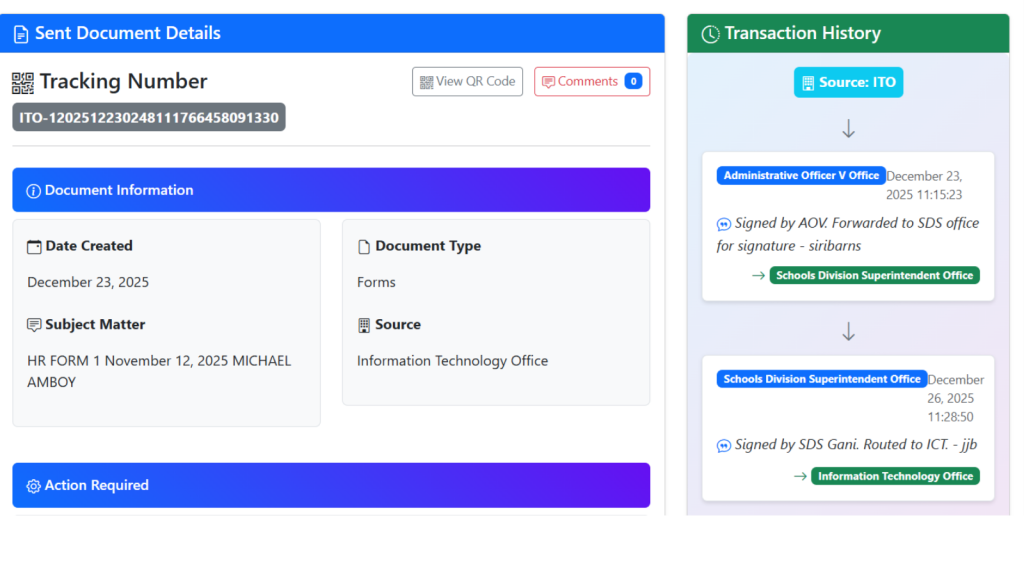
My **Document Tracking System** solves the chaos of paper-based document management. Features include:
– **Document upload and categorization** with metadata tagging
– **Advanced search functionality** to find documents instantly
– **Version control** to track document revisions
– **Audit trail** showing who accessed or modified documents
– **Role-based access control** for security
– **Automated notifications** for pending approvals or expirations
– **Cloud-based access** from any device, anywhere
Organizations using this system have reduced document retrieval time from hours to seconds and eliminated lost paperwork entirely.
## Why Choose Me for Your Custom Software Project
I understand that choosing a developer for your custom software project is a significant decision. Here is what sets me apart:
– **End-to-end expertise** – I handle everything from requirements to deployment
– **Proven track record** – My systems are actively used by businesses daily
– **Clear communication** – I keep you informed throughout the project
– **Quality focus** – I do not cut corners; I build software that lasts
– **Ongoing support** – I provide maintenance and updates after deployment
Whether you need a **custom POS system**, a **document management solution**, an **inventory tracking application**, or any other specialized software, I have the skills and experience to deliver.
## Conclusion: Let’s Build Your Custom Software Solution
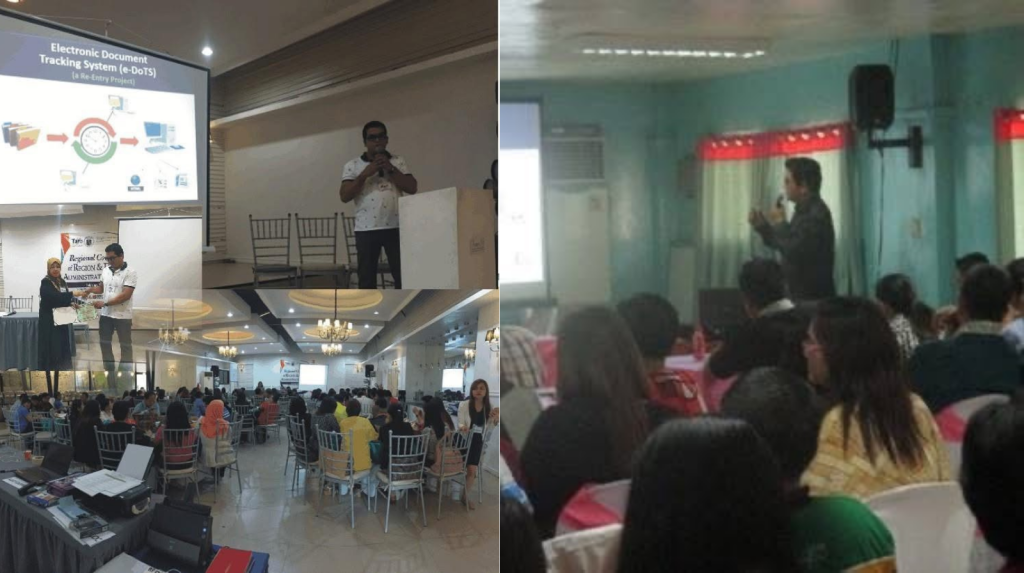
Building custom software is both an art and a science. It requires technical expertise, creative problem-solving, and a deep understanding of business needs. Through my systematic approach—from requirements gathering to deployment—I ensure that every project is completed correctly and efficiently.
My portfolio of work, including my **Point-of-Sale system** and **Document Tracking System**, demonstrates my ability to create reliable, user-friendly applications that solve real problems.
If you are looking for a developer who can turn your ideas into functional, efficient software, I am ready to help. **Contact me today** to discuss your project requirements, and let’s build something great together.